For research only. Not intended for human or veterinary consumption.

Ipamorelin

Ipamorelin is a peptide most often mentioned in the context of stimulating growth hormone in a gentler and more selective way. It is of interest because it offers a smoother, more controlled approach, without the pronounced side effects characteristic of some other peptides in the same group. For this reason, Ipamorelin is often examined in research related to recovery, sleep, and long-term hormonal balance. What Ipamorelin represents

← Back to products

What is Ipamorelin?

Ipamorelin is a synthetic peptide belonging to the GHRP (Growth Hormone Releasing Peptides) group, developed to selectively stimulate the release of growth hormone. Unlike earlier members of this group, Ipamorelin was designed to have a more targeted action and minimal impact on other hormonal pathways.

In a scientific context, Ipamorelin is studied primarily in the fields of endocrinology, metabolism, and recovery processes. The peptide is of interest due to its ability to activate the GH secretagogue receptor (GHS-R), without being significantly associated with increases in cortisol or prolactin, which sets it apart from some other GHRP peptides.

Potential benefits of Ipamorelin according to scientific studies

The effects described below are based on published scientific studies and experimental protocols in which Ipamorelin is examined as a selective stimulator of growth hormone.

Selective stimulation of growth hormone: Ipamorelin is associated with increased release of growth hormone, without significant influence on cortisol and prolactin.

Support for recovery after physical effort: In a research context, the peptide is examined in connection with faster recovery processes after training or increased demand.

Improved sleep quality: Ipamorelin is frequently associated with deeper, higher-quality sleep, which is important for the natural secretion of growth hormone.

Support for muscular adaptation: Through its influence on GH secretion, the peptide is examined as a factor that supports adaptation of muscle tissue.

Supports bone resilience: Ipamorelin is examined as a peptide that, through stimulation of growth hormone, contributes to maintaining bone density.

Improved appearance of skin, hair, and nails: Through its link with processes involved in collagen synthesis, Ipamorelin is associated with a better appearance of the skin and its appendages.

Supports mental clarity and focus: Some observations associate Ipamorelin with better focus and increased mental resilience, especially under conditions of cognitive demand.

Supports normal blood circulation: The peptide is associated with processes that contribute to better supply of tissues with oxygen and nutrients.

Ipamorelin dosing in research protocols

Scientific standards require a precise approach to establishing amounts, for objectivity and reproducibility of results. In practice, the most common indicative research schemes are as follows:

More moderate approach: 100-150 mcg 1-2 times per day — used as a baseline scheme in the general observation of the GH response and recovery processes.

More widespread approach: 200-300 mcg twice per day (morning and evening), or a total of 400-600 mcg per day — this scheme is frequently mentioned in the context of more pronounced, yet still controlled, GH stimulation.

Maximum research range: up to 300 mcg per administration — used in higher-intensity protocols, usually for shorter periods.

Duration: cycles most frequently range between 8 and 12 weeks, with a planned break of 2-4 weeks between cycles.

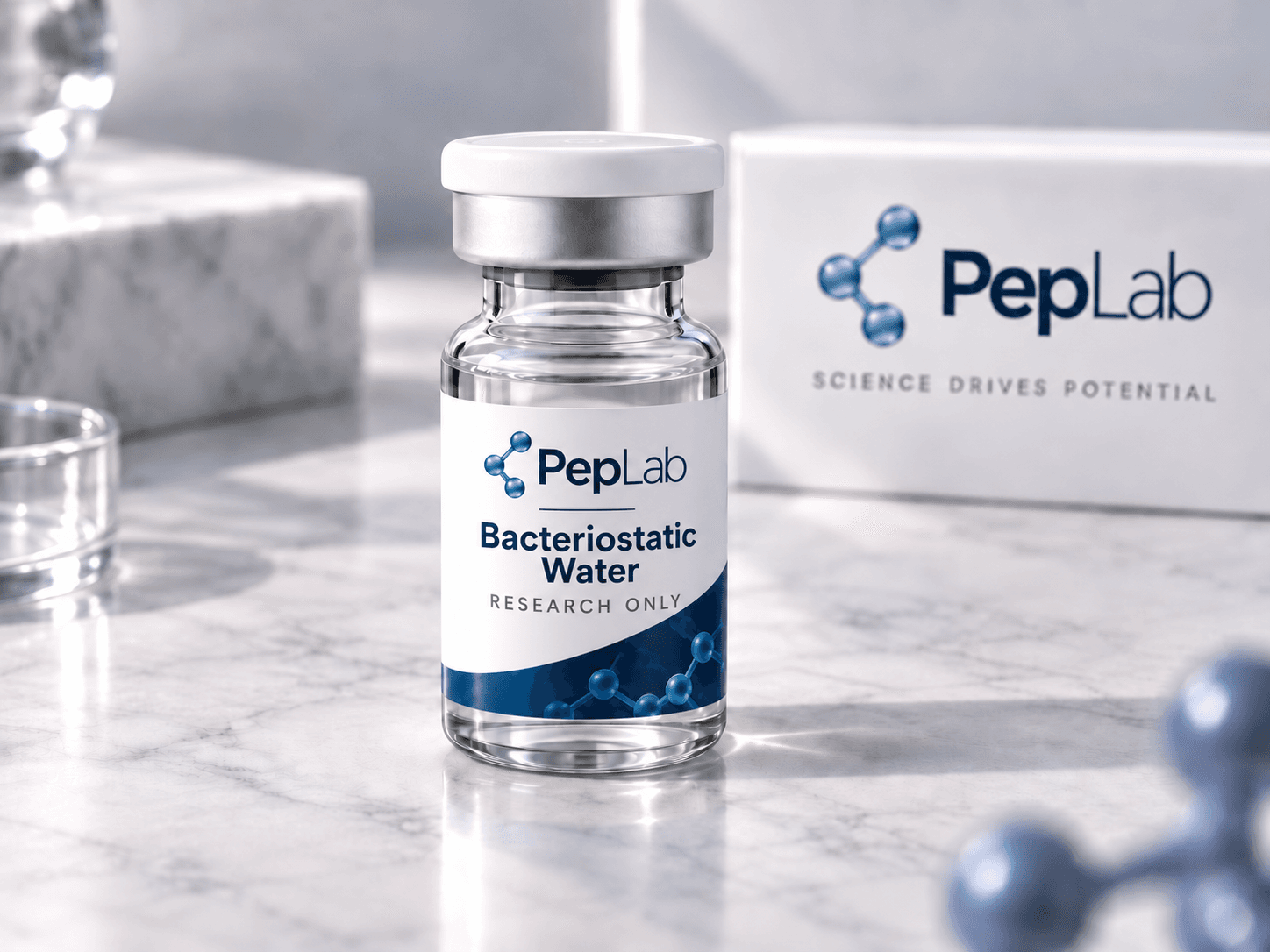
When reconstituting the peptide, bacteriostatic water is typically used. Good practice is to add the liquid carefully along the wall of the vial, rather than directly onto the powder, in order to preserve the peptide structure.

Scientific studies on Ipamorelin

Ipamorelin was developed as a selective agonist of the GHS-R receptor and has appeared in the scientific literature since the late 1990s. Early publications (including in the European Journal of Endocrinology) describe that, in preclinical models, Ipamorelin produces a pronounced release of growth hormone, showing greater selectivity relative to some other GHRP peptides, including a minimal effect on ACTH/cortisol under comparable conditions.

In Pharmaceutical Research (1999), a dose-escalation study in healthy men was published, using i.v. infusions, in which ipamorelin and GH concentrations were measured and the concentration–effect relationship was modeled.

There is a randomized, double-blind, placebo-controlled phase 2 study published in the International Journal of Colorectal Disease (2014), in 117 patients after intestinal resection (ipamorelin i.v. 0.03 mg/kg twice daily for up to 7 days). The study reported good tolerability.

Mechanism of action of Ipamorelin

Ipamorelin acts as a selective growth hormone secretagogue, activating the specific receptors responsible for GH release from the pituitary. Unlike some older GHRP peptides, its mechanism is oriented toward a cleaner, more targeted hormonal signal, without significant activation of other endocrine pathways.

Key elements of the mechanism of action:

Binding to GHS-R (Growth Hormone Secretagogue Receptor): Ipamorelin binds to the GHS-R receptor, located primarily in the pituitary, which directly stimulates the release of growth hormone.

Synergy with the endogenous GHRH pathway: The peptide amplifies the natural GHRH (Growth Hormone Releasing Hormone) signal without replacing it, which leads to a more physiological pattern of GH secretion.

Minimal influence on cortisol and prolactin: Unlike other GHRP peptides, Ipamorelin shows weak or negligible interaction with pathways related to cortisol and prolactin, which explains its better tolerability profile.

Pulsatile GH secretion: Ipamorelin’s action leads to GH release in short physiological pulses, similar to the body’s natural rhythm, rather than constant stimulation.

This mechanism positions Ipamorelin as a peptide with high selectivity, oriented toward optimizing GH signaling without broad hormonal intervention.

Possible side effects of Ipamorelin and safety

According to published observations, Ipamorelin is usually described as a well-tolerated peptide under controlled conditions. The reactions mentioned are mainly mild and transient:

Mild headache or a sensation of tension in the initial period.

Temporary fatigue or drowsiness.

Mild redness or discomfort at the administration site.

Temporary fluid retention.

Individual sensitivity, which usually decreases with adaptation.

Comparing Ipamorelin with other peptides

Ipamorelin belongs to the GHRP peptide group, but stands out through a more selective and gentler action profile, which makes it a preferred choice in protocols that aim for controlled GH stimulation without unnecessary hormonal intervention.

Ipamorelin versus GHRP-6: Both peptides stimulate growth hormone through the GHS-R receptor, but GHRP-6 is known for its pronounced effect on appetite. Ipamorelin, by contrast, has minimal influence on hunger, which makes it more suitable for protocols without appetite stimulation.

Ipamorelin versus CJC-1295: The main difference is the mechanism of action. Ipamorelin acts directly through the GHS-R receptor, while CJC-1295 stimulates GH release through the GHRH pathway. For this reason, the two peptides are often viewed as complementary in combined protocols.

Ipamorelin versus Sermorelin: Sermorelin is a GHRH analog and stimulates the pituitary indirectly. Ipamorelin, by contrast, activates GH secretion through a more direct and faster mechanism, which leads to a more noticeable initial effect.

Frequently asked questions (FAQ) about Ipamorelin

What is the main difference between Ipamorelin and other GHRP peptides?

Ipamorelin stands out through a more selective action and a gentler profile, stimulating growth hormone without a strong influence on appetite, cortisol, or prolactin.

Is Ipamorelin suitable for those seeking a smoother effect?

Yes, Ipamorelin is frequently chosen in research protocols that aim for controlled, more physiological GH stimulation, without abrupt hormonal intervention.

Can Ipamorelin be used on its own?

In a research setting, Ipamorelin is frequently used alone, but it is also included in combined protocols, depending on the objectives of the observation.

Does the timing of administration matter?

In scientific observations, evening administration or around rest periods is frequently mentioned, due to the link between growth hormone and sleep.

Is Ipamorelin suitable for longer-term research?

Due to its good tolerability and selective mechanism, Ipamorelin is frequently used in longer protocols, while respecting a cyclic approach.

Disponibil
Ipamorelin

Ipamorelin

FavouriteShare

de la 239 RON

Categorii: Hormon de Creștere

Pret unitar

239 RON

Subtotal

239 RON

Varianta

Reducere automata la cantitate

La 3 bucati primesti -8%, la 5 bucati primesti -12%, la 10 bucati primesti -25%.

Disclaimer

Acest produs este destinat exclusiv scopurilor de cercetare. Nu este destinat consumului uman sau veterinar. Prin achizitionarea acestui produs, confirmati ca aveti peste 18 ani si ca il veti utiliza exclusiv in scopuri de cercetare.

Confirm ca am cel putin 18 ani, ca sunt un utilizator calificat de cercetare si inteleg ca produsele sunt destinate exclusiv cercetarii de laborator in vitro, nu pentru consum uman sau veterinar.

Apă bacteriostatică

Livrare rapida in toata tara

Estimare 1–3 zile

Plata ramburs la livrare

Cea mai sigura metoda de plata in Romania

We have the perfect resource for reconstitution!

Go to the calculator

Cart (0)

Your cart is empty.

View products