For research only. Not intended for human or veterinary consumption.

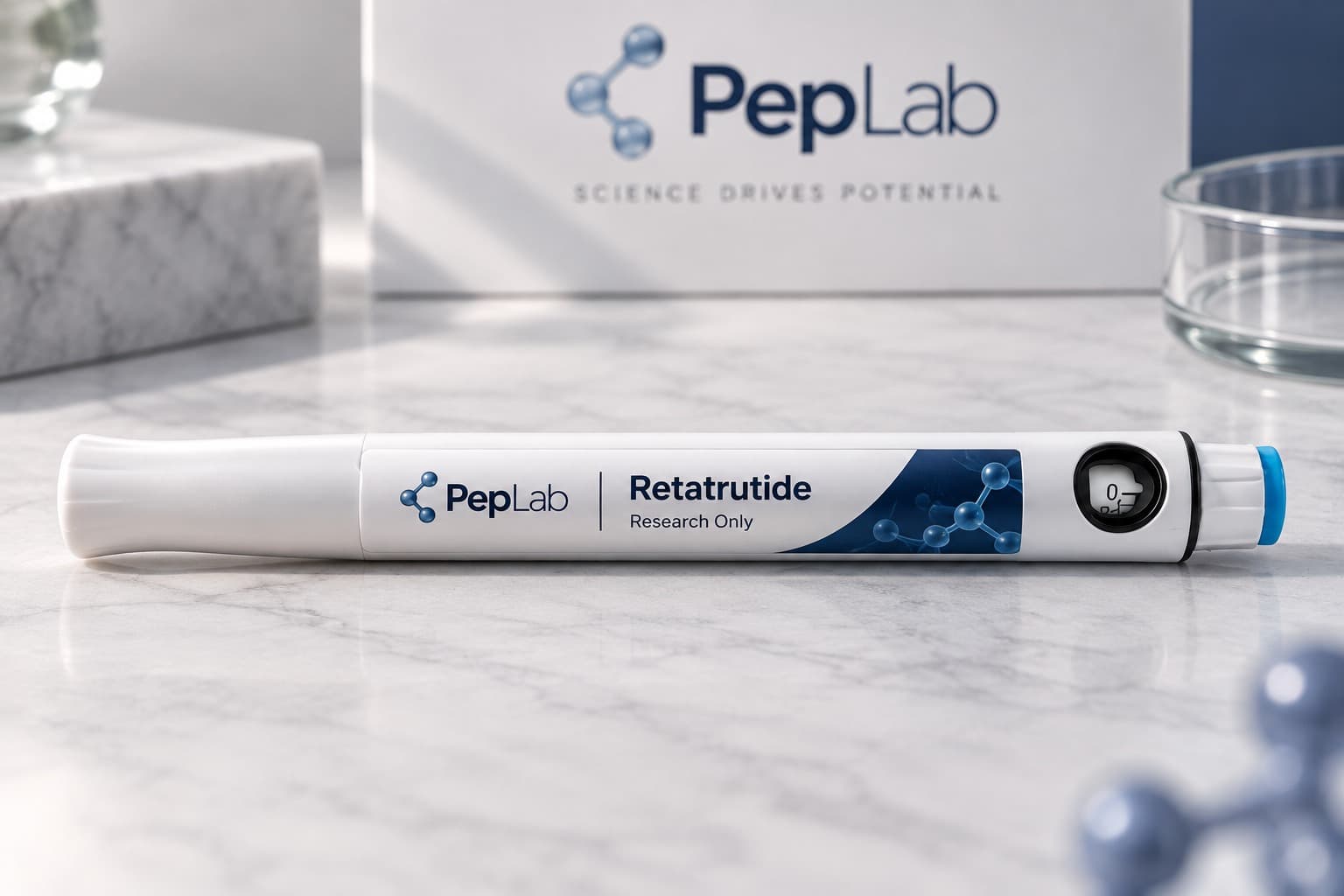
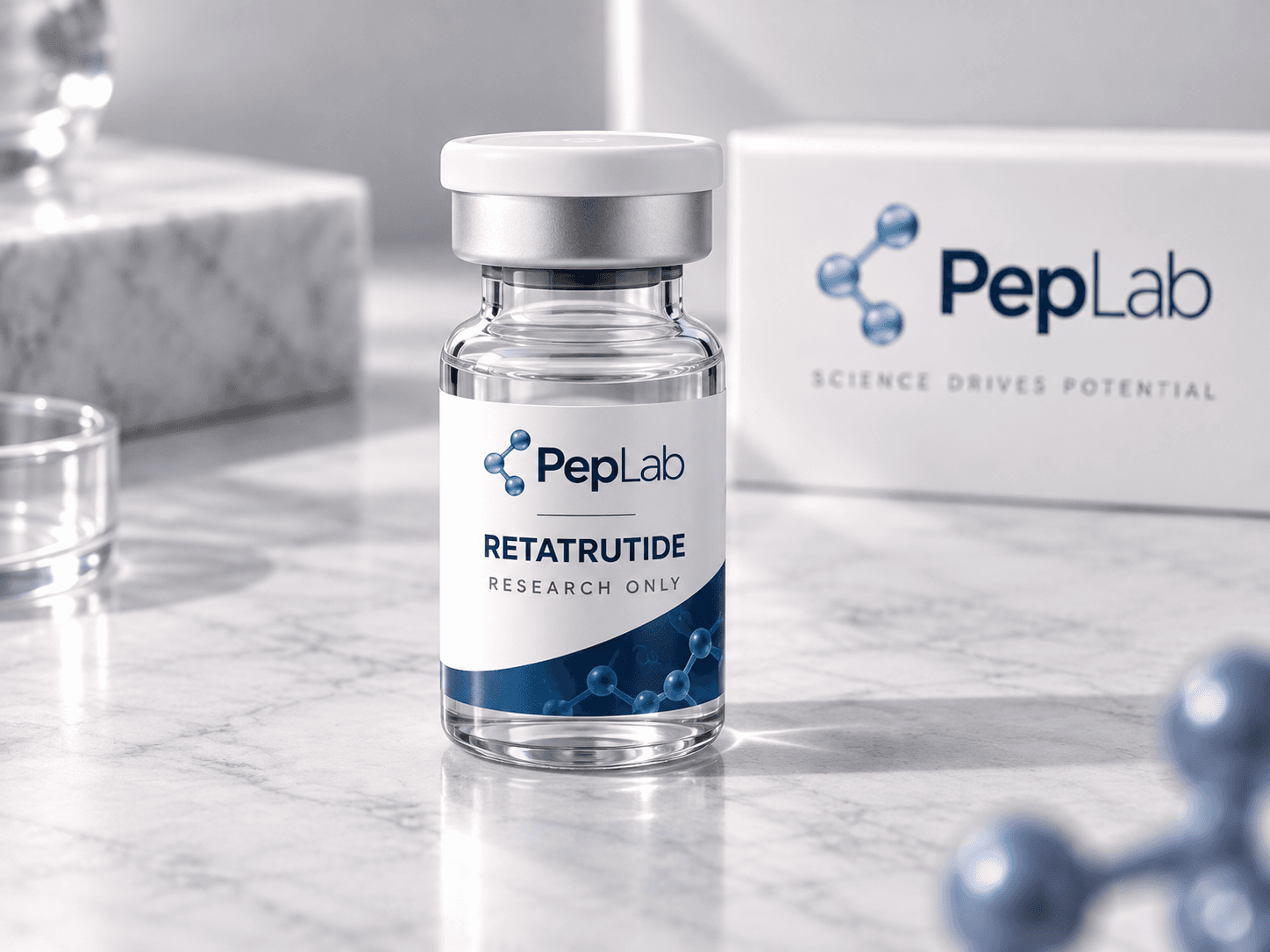
Retatrutide

Retatrutide is a next-generation peptide used in laboratory protocols focused on appetite control, body weight, and energy metabolism. It acts through simultaneous interaction with several key receptors that regulate hunger, energy expenditure, and the body’s metabolic adaptation.

← Back to products

What is Retatrutide?

What is Retatrutide?

Retatrutide is a synthetic peptide developed to mimic and modulate natural biological signals in the body. It belongs to the group of so-called multi-receptor agonists, meaning it is designed to interact simultaneously with more than one receptor type.

The main distinctive feature of Retatrutide is its triple-agonist profile. In a research context, the peptide is associated with:

GLP-1 receptors (Glucagon-Like Peptide-1)

GIP receptors (Glucose-Dependent Insulinotropic Polypeptide)

glucagon receptors (GCGR)

This combination allows Retatrutide to be studied as a molecule with extended action on metabolic processes. Unlike peptides that act selectively on a single pathway, Retatrutide shows a synergistic effect resulting from simultaneous activation of multiple regulatory mechanisms.

Potential benefits of Retatrutide according to scientific studies

Retatrutide is most frequently associated with effects of interest for appetite control, body weight, and metabolic balance. On this basis, the following potential benefits are discussed:

Regulation of appetite and eating behavior: The peptide is associated with influence on central mechanisms responsible for hunger and satiety, making it a subject of interest in studies related to caloric intake control.

Support for metabolic adaptation: Retatrutide is studied in connection with how the body adapts to changes in energy balance and caloric deficit.

Influence on body composition: In scientific models, the peptide is analyzed as a factor that may influence the distribution of adipose and non-adipose tissue.

Improved insulin sensitivity: Through interaction with GLP-1 and GIP receptors, Retatrutide is associated with more efficient glucose utilization.

Support for energy expenditure and thermogenesis: Activation of glucagon receptors is associated with increased energy expenditure, which is a subject of intense scientific interest.

Suitable for longer-term metabolic research: Due to its complex mechanism, Retatrutide is frequently included in longer monitoring protocols.

Retatrutide dosing in research protocols

In practice, different dosing schemes are used, chosen according to objectives, the effect sought, protocol duration, and individual approach. The most commonly encountered variants include:

Initial research protocol: 1–2 mg weekly

Standard protocol: 3–4 mg weekly

Higher (advanced) approach: 5–6 mg weekly

Frequency: 1–2 administrations per week

Duration: 8–12 weeks

Break: 4 weeks between cycles

The peptide is most frequently reconstituted with bacteriostatic water; it is recommended that the solution be added carefully to preserve the molecule’s structural integrity.

Scientific research on Retatrutide

Retatrutide is the subject of active preclinical and clinical research focused on metabolic regulation and body-weight control. One of the most cited studies is published in The New England Journal of Medicine and led by Ania Jastreboff and her team, analyzing Retatrutide’s effect as a triple agonist on appetite, energy balance, and body weight.

The publication emphasizes that combined action on GLP-1, GIP, and glucagon receptors differentiates Retatrutide from earlier peptides such as Semaglutide and Tirzepatide and positions it as a promising molecule for deeper metabolic research.

Mechanism of action of Retatrutide

The mechanism of action of Retatrutide is complex and multi-stage. Instead of influencing a single isolated pathway, the peptide acts by synchronizing several key receptor systems:

Activation of GLP-1 receptors: Activation of GLP-1 receptors is one of the main mechanisms through which Retatrutide influences appetite and eating behavior. This process is associated with signaling to satiety centers in the brain, leading to a faster feeling of fullness and better control over food intake. In parallel, delayed gastric emptying is observed, which prolongs the feeling of satiety after a meal.

Stimulation of GIP receptors: Stimulation of GIP receptors complements GLP-1 action, influencing how the body responds to ingested food. This mechanism is associated with more efficient nutrient utilization and better coordination between food intake and the insulin response. In a research context, GIP receptor activity is of interest because it may support metabolic adaptation in prolonged protocols focused on weight control and stabilizing energy balance.

Activation of glucagon receptors (GCGR): Activation of glucagon receptors differentiates Retatrutide from many other peptides in this category. This mechanism is associated with increased energy expenditure because it stimulates processes through which the body uses accumulated energy reserves. In this context, mobilization of fat stores and intensified thermogenesis are discussed — a process by which the body consumes more energy as heat. It is precisely this combination of appetite control and increased energy expenditure that makes Retatrutide a subject of intense interest in metabolic research.

This triple activation makes Retatrutide unique among modern peptides and explains the growing interest in it in scientific communities.

Possible side effects of Retatrutide and safety

Observations so far indicate that Retatrutide is generally associated with good tolerability, and the reactions described are mainly mild and temporary, especially in the early stages of use. The most frequently mentioned are:

Mild gastric discomfort.

Nausea in the initial period, during adaptation.

Decreased appetite.

Temporary fatigue.

Peptide quality, correct storage, and adherence to proper administration protocols are of essential importance.

Comparing Retatrutide with other peptides

Retatrutide is often compared with peptides such as Semaglutide and Tirzepatide, because all are associated with appetite regulation and metabolic processes. The main difference among them lies in the number of receptor pathways on which they act.

Semaglutide — acts primarily through GLP-1 receptors and is oriented especially toward appetite suppression and control of food intake.

Tirzepatide — combines GLP-1 and GIP receptor activity, which extends its action on the metabolic response compared with mono-receptor peptides.

Due to this extended receptor profile, Retatrutide is often considered a next-generation peptide, suitable for more complex metabolic protocols.

Frequently asked questions (FAQ) about Retatrutide

For protocols focused on weight control?

Retatrutide is often included in protocols related to body-weight management, due to its combined action on appetite, metabolic response, and energy expenditure.

How does Retatrutide influence appetite?

The peptide is designed to interact with receptors involved in hunger and satiety signals. This makes it a subject of high interest in protocols aimed at better control of food intake.

Is Retatrutide suitable for longer protocols?

Due to its mode of action, Retatrutide is often used in more prolonged protocols, usually with a break period planned between cycles.

Can Retatrutide be combined with other peptides?

In a research context, Retatrutide is often analyzed as part of combined protocols. Such combinations are usually chosen according to protocol objectives and adapted to the mode of action of the other peptides.

Is an adaptation phase needed at the start of use?

In many protocols an initial period with a more moderate approach is planned, allowing the body to adapt gradually to the peptide’s action, especially when the focus is on appetite and metabolism.

Stoc aproape epuizat
Retatrutide

Retatrutide

FavouriteShare

de la 749 RON

Categorii: Metabolism & Controlul Greutății

Pret unitar

749 RON

Subtotal

749 RON

Varianta

Reducere automata la cantitate

La 3 bucati primesti -8%, la 5 bucati primesti -12%, la 10 bucati primesti -25%.

Disclaimer

Acest produs este destinat exclusiv scopurilor de cercetare. Nu este destinat consumului uman sau veterinar. Prin achizitionarea acestui produs, confirmati ca aveti peste 18 ani si ca il veti utiliza exclusiv in scopuri de cercetare.

Confirm ca am cel putin 18 ani, ca sunt un utilizator calificat de cercetare si inteleg ca produsele sunt destinate exclusiv cercetarii de laborator in vitro, nu pentru consum uman sau veterinar.

Apă bacteriostatică

Livrare rapida in toata tara

Estimare 1–3 zile

Plata ramburs la livrare

Cea mai sigura metoda de plata in Romania

We have the perfect resource for reconstitution!

Go to the calculator

Cart (0)

Your cart is empty.

View products